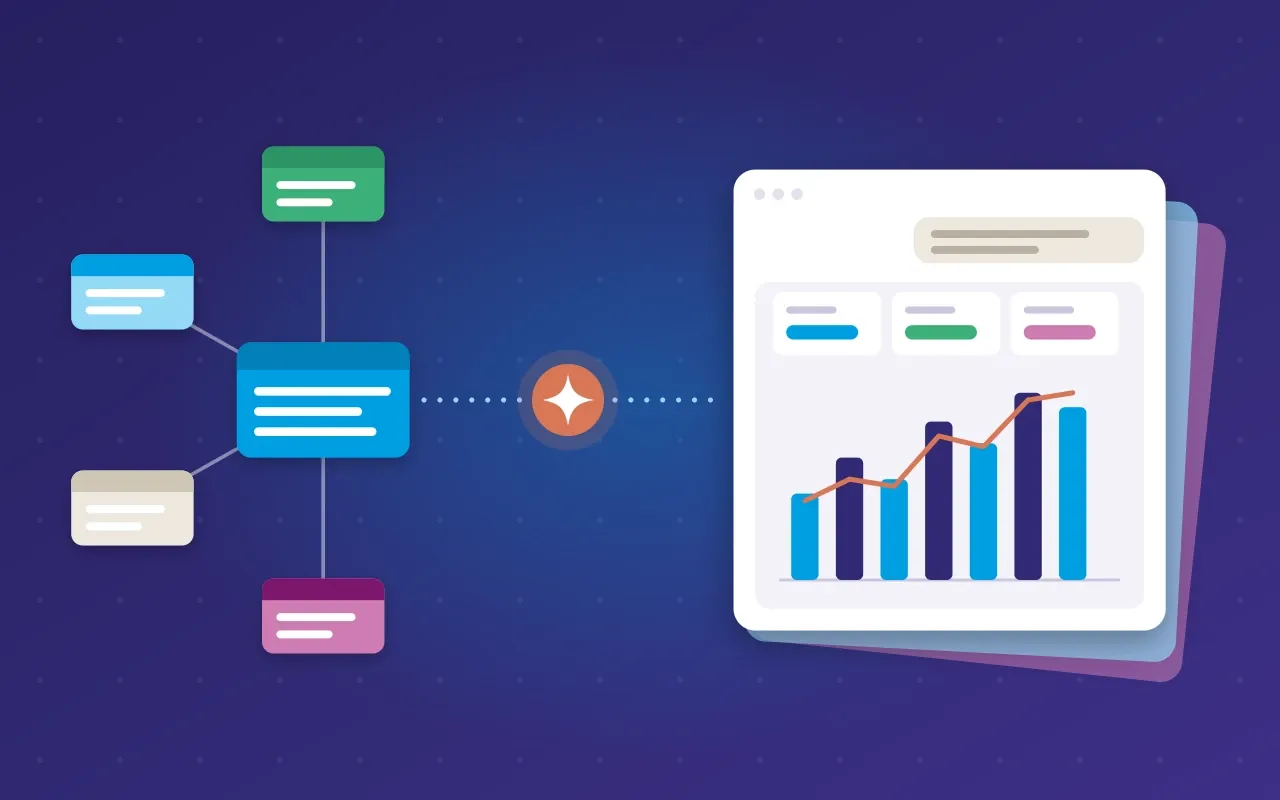

AI ambitions versus outdated IT: where do you start?
Many organisations want to use AI, but are behind on modernising their IT. Why AI gets stuck on the systems underneath, and three steps to decide where you start.

AI is on the agenda, the foundation is not yet
Almost every management team wants to do something with AI, from an assistant that answers customer questions to an agent that processes orders. A pilot usually works. After that it often gets stuck, not on the AI itself, but on the systems underneath.
The same picture emerges from Kyndryl's Modernization Report 2026: 53 percent of the Dutch respondents are behind schedule on their modernisation goals (Dutch IT Channel). Kyndryl mainly surveyed large enterprises, but the pattern is familiar to many SMEs, where the IT landscape has grown application by application.
The good news: you do not have to renew everything before you start with AI. You do need to know where you stand, and where to take the first step.
Where AI gets stuck
An AI application is as good as the data and systems it can reach. Three bottlenecks keep coming up:
- Data without a fixed place. Customers in the CRM, orders in the ERP, agreements in Excel. Which source is leading?
- Integrations nobody oversees. Separate scripts work, until something changes.
- Systems without an entrance. Without an API, AI cannot reach them in a controlled way.
This is how you decide where to start
- Choose one process. Not "we are going to do something with AI", but for example: answering quote requests faster. Then you see straight away which systems and data matter.
- Map the systems around that process. Which applications are involved, where is the data, how are they connected and what may go to the cloud?
- Make the integrations manageable, step by step. One integration layer with APIs gives AI a controlled route to the right data. Start with the system that blocks your chosen process; every next AI application becomes simpler after that.
Would you like to know whether this works for you too?
You do not have to work that out alone. Referit maps your IT landscape together with you, determines which parts stay in your own hands and which go to the cloud, and makes a design that fits your AI plans. If you wish, we also take care of the realisation, from IT architecture to application and data integration. That way you know which step delivers the most, before you invest.
Are you unsure whether your IT is ready for the AI application you have in mind, or which system to tackle first? Schedule a conversation with Ron and discuss where the first step lies for your organisation.